

Election Special: Ask Every Candidate
A non-partisan 2026 rural health engagement resource
Last night was the leadership debate that featured Emily Lowan, David Eby and Lorne Derkson from the 3 major parties. Elenor Sturko and Dallas Brodie were not included but did provide a short video pitch to voters on their political parties’ ambitions.
We are a non-partisan organization and believe rural health and wellness need non-partisan and cross aisle solutions supported by all. Who you vote for matters and staying informed on the rush of promises and how they may or may not improve rural life is important. This table will give you some insights into what we have learnt so far.
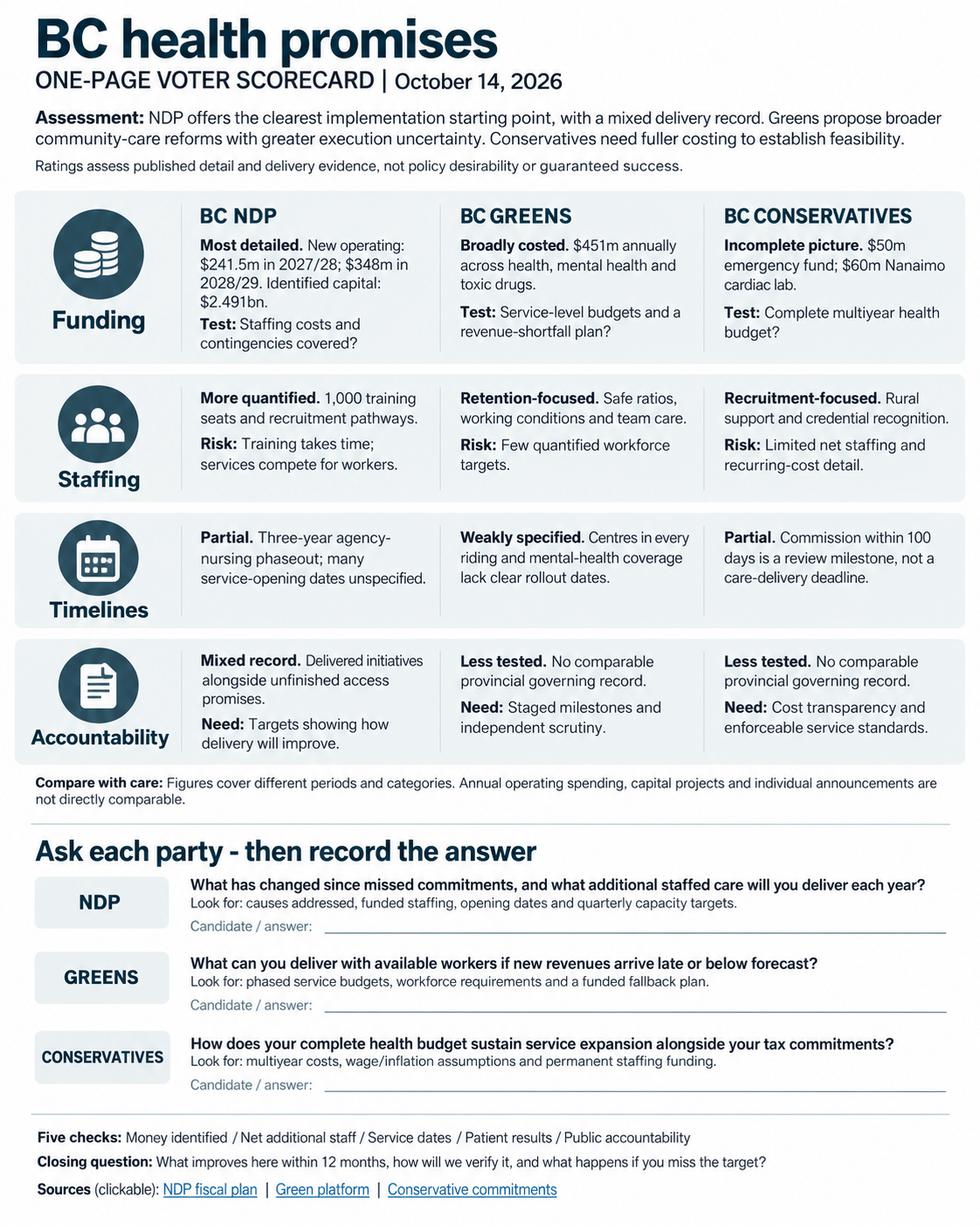
What remains largely absent from all party platforms and healthcare promises to date is a clear commitment to rural-specific healthcare reform, grounded in the unique realities of British Columbia’s rural, remote and Indigenous communities.
For too long, healthcare policies have been developed through systems and processes that prioritize urban populations, with rural communities expected to adapt to models that were never designed for their circumstances. Addressing this imbalance requires more than additional funding, recruitment incentives or promises to restore services. It requires a fundamental change in how healthcare policy is developed, how priorities are established and how success is measured.
The people who live, work and raise their families in rural and remote BC must have a meaningful role in shaping the policies and services that affect their lives. Their lived experience, local knowledge and understanding of community needs must inform solutions from the outset, rather than being sought after decisions have already been made.
The BC Rural Health Network believes that while no single model of healthcare delivery will work for every rural community, a consistent, community-driven process for developing locally appropriate solutions can work across the province. This means recognizing that access to healthcare is inseparable from transportation, housing, workforce sustainability and the broader social determinants of health.
Ultimately, the question for every political party is not simply what healthcare services they promise to deliver, but how they will ensure rural communities have a genuine voice in designing, implementing and evaluating those services. Meaningful rural healthcare reform must begin with communities, not simply be delivered to them.
The BC Rural Health Network encourages rural residents, organizations, local leaders, and community partners to ask every candidate clear questions about rural health access and community wellbeing.
These materials are intended as non-partisan tools to support informed conversations. They can be shared with candidates, community members, local media, organizations, and anyone interested in understanding how healthcare access affects rural and remote communities.